Insulation Resistance Tester | 15kV Digital Megohmmeter | DAR PI Insulation Meter
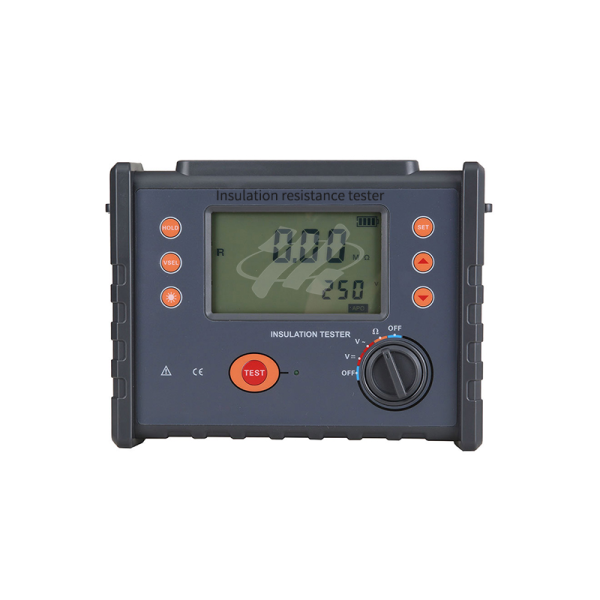
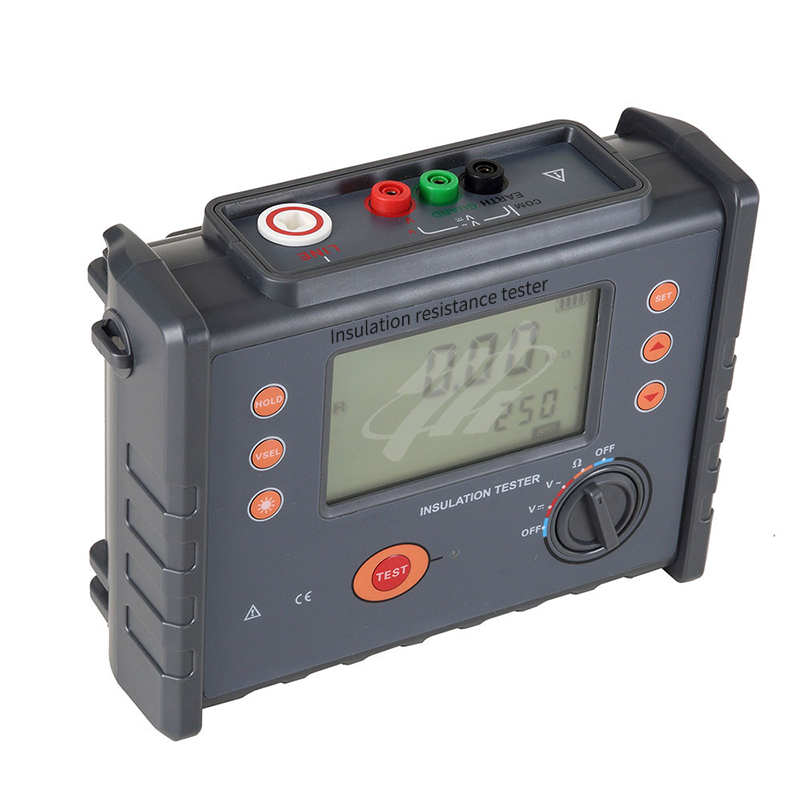
The insulation resistance tester—also known as a megohmmeter or high-voltage insulation resistance tester—is used for measuring the insulation resistance of motors, transformers, cables, switchgear and other electrical equipment during preventive maintenance, commissioning and troubleshooting.
This digital insulation meter supports insulation resistance test, voltage test, DC current test and capacitance test, with rated voltages from 100V to 15kV and insulation resistance measurement up to 50TΩ, covering the insulation testing needs of most industrial and power electrical systems.

Applications & Target Audience: Engineered for motor, transformer and generator repair workshops, elevator and HVAC maintenance companies, shipbuilding and marine electrical maintenance teams, and building electrical system contractors that perform insulation resistance, DAR and PI testing on motors, transformers, cables and switchgear during preventive maintenance and commissioning.
Voltage Ranges and Accuracy
| Measurement Function |
Measurement Range |
Accuracy |
Resolution |
| DC Voltage |
DC 0.0V – 1000V |
±1.5% rdg ±3 dgt |
0.1V |
| AC Voltage |
AC 0.0V – 750V |
±1.5% rdg ±3 dgt |
0.1V |
Technical Specifications
| Functions |
Insulation Resistance Test, Voltage Test, DC Current Test, Capacitance Test |
| Reference Conditions |
23°C ±5°C, <75% RH |
| Rated Voltage |
100V, 250V, 500V, 1000V, 2500V, 5000V |
| Insulation Resistance Range |
0.01 MΩ – 10 TΩ | Resolution: 0.01 MΩ |
| Rated Voltage |
250V, 500V, 1000V, 2500V, 5000V, 10 kV |
| Insulation Resistance Range |
0.01 MΩ – 35 TΩ | Resolution: 0.01 MΩ |
| Rated Voltage |
500V, 1000V, 2500V, 5000V, 10 kV, 15 kV |
| Insulation Resistance Range |
0.01 MΩ – 50 TΩ | Resolution: 0.01 MΩ |
| Measurement Voltage (V) |
Rated Voltage × (1 ±10%) |
| DC Voltage Range |
0 – 1000V | Resolution: 0.1V |
| AC Voltage Range |
0 – 750V | Resolution: 0.1V |
| DC Current |
0.1 nA – 6 mA | Resolution: 0.1 nA |
| Capacitance |
10 nF – 50 µF | Resolution: 10 nF |
| Output Short-Circuit Current |
≥6 mA @ 15 kV |
| Absorption Ratio (DAR) and Polarization Index (PI) Measurement |
Supported |
| Power Supply |
12.6V Rechargeable Lithium Battery |
| Backlight |
Supported Controllable gray-white screen backlight, suitable for use in dimly lit environments. |
| Display Mode |
4-digit extra-large LCD display with gray-white screen backlight. |
Measurement Principle and Key Functions
Insulation resistance measurement utilizes a voltage generator to generate a voltage (V), which is applied across the resistor under test. By measuring the current (I) flowing through the resistor, the resistance value (R) is calculated using the formula R = V/I. The higher the insulation resistance, the better the insulation condition of the equipment under test.
DAR and PI supported: absorption ratio and polarization index measurement reveal moisture and aging trends of insulation;
Six rated voltages from 100V to 5000V in the basic configuration, extendable to 10kV and 15kV for high-voltage insulation testing;
Output short-circuit current ≥6mA at 15kV for fast charging of large capacitive test objects;
Controllable gray-white screen backlight for clear reading in dimly lit environments;
4-digit extra-large LCD display for convenient on-site reading;
12.6V rechargeable lithium battery power supply with low battery voltage warning;
Designed, manufactured and tested in accordance with the IEC 61010 safety specifications.
Safety Precautions
- In all circumstances, special attention must be paid to safety when using this instrument.
- This instrument has been designed, manufactured, and tested in accordance with the IEC 61010 safety specifications.
- During measurements, do not use high-frequency signal generators—such as mobile phones—in the vicinity of the instrument, as this may introduce measurement errors.
- Pay close attention to the text and symbols displayed on the labels affixed to the instrument's casing.
- Before use, verify that the instrument and its accessories are in good condition; specifically, ensure that the insulation on the instrument and test leads is intact, with no exposed conductors or broken wires, before proceeding with measurements.
- During the measurement process, strictly avoid touching exposed conductors or the circuit currently being tested.
- Ensure that the connection plugs of the test leads are firmly inserted into the corresponding ports on the instrument.
- Do not perform measurements in flammable environments, as sparks generated during operation could trigger an explosion.
- If the instrument's casing or test leads become damaged—exposing internal metal components—while the unit is in use, immediately cease operation.
- Do not leave or store the instrument for extended periods in environments characterized by high temperatures, high humidity, condensation, or direct sunlight.
- When replacing the instrument's batteries, ensure that the test leads have been disconnected from the unit and that the instrument is powered off.
- If the instrument displays the "Low Battery Voltage" symbol, recharge the unit immediately; failure to do so may result in measurement inaccuracies.
- Strictly avoid performing charging or data transmission operations while a measurement is in progress.
FAQ
Q1: Who is this insulation resistance tester designed for?
It is designed for motor, transformer and generator repair workshops, elevator and HVAC maintenance companies, shipbuilding and marine electrical maintenance teams, and building electrical system contractors that perform insulation resistance, DAR and PI testing on motors, transformers, cables and switchgear during preventive maintenance and commissioning.
Q2: What is this insulation resistance tester used for?
It is used for measuring the insulation resistance of motors, transformers, cables, switchgear and other electrical equipment, helping maintenance engineers evaluate insulation condition, detect moisture or aging trends, and prevent electrical failures before they occur.
Q3: What are the key technical specifications of this megohmmeter?
It supports rated voltages of 100V, 250V, 500V, 1000V, 2500V and 5000V in the basic configuration, extendable to 10kV and 15kV, with insulation resistance ranges up to 50TΩ, DC voltage 0-1000V, AC voltage 0-750V, DC current 0.1nA-6mA and capacitance 10nF-50µF.
Q4: Does this insulation resistance meter support DAR and PI tests?
Yes. The absorption ratio (DAR) and polarization index (PI) measurement functions are supported, which are essential for evaluating insulation moisture absorption and aging trends of large motors, transformers and cables.
Q5: What are the power supply and safety features?
It is powered by a 12.6V rechargeable lithium battery with a low battery voltage warning, and features a controllable gray-white screen backlight and a 4-digit extra-large LCD display. The instrument is designed, manufactured and tested in accordance with the IEC 61010 safety specifications.


